-
-
Sort through our administrative resume examples to see what works best for you.
-
Our sales resume examples can help you write the best possible resume.
-
Explore our food service resume examples to show your skills effectively.
-
Start crafting your job-winning resume with our teaching resume examples.
-
-
-
Use our administrative cover letter examples for ideas on writing your own.
-
Use our sales cover letter examples to effectively show your sales accumen.
-
Write your job-winning cover letter following our nursing cover letter examples.
-
Learn to tell your story in education using our teaching cover letter examples.
-






- Our customers have been hired by*


Entry-Level Customs & Border Protection Officer Resume
This resume example highlights the relevant skills and accomplishments of career changers, making it a strong choice for those transitioning into a Customs & Border Protection officer role.

Why this resume works:
A strong academic foundation shows the candidate is well-prepared to transition into this role.

Mid-Career Customs & Border Protection Officer Resume
This Customs & Border Protection officer resume example is ideal for professionals seeking to leverage their experience in border security roles while pursuing advancement opportunities and specialized training.
Why this resume works:
Mid-career Customs & Border Protection officers can highlight high-accuracy processing, reduced delays, and training that improved team efficiency.

Experienced Customs & Border Protection Officer Resume
This Customs & Border protection officer resume is perfect for experienced professionals seeking to leverage their skills in leadership and operational excellence.
Why this resume works:
Leadership roles and advanced certifications underscore the ability to manage complex scenarios.

Looking for something else?
Create Your Standout Resume Today
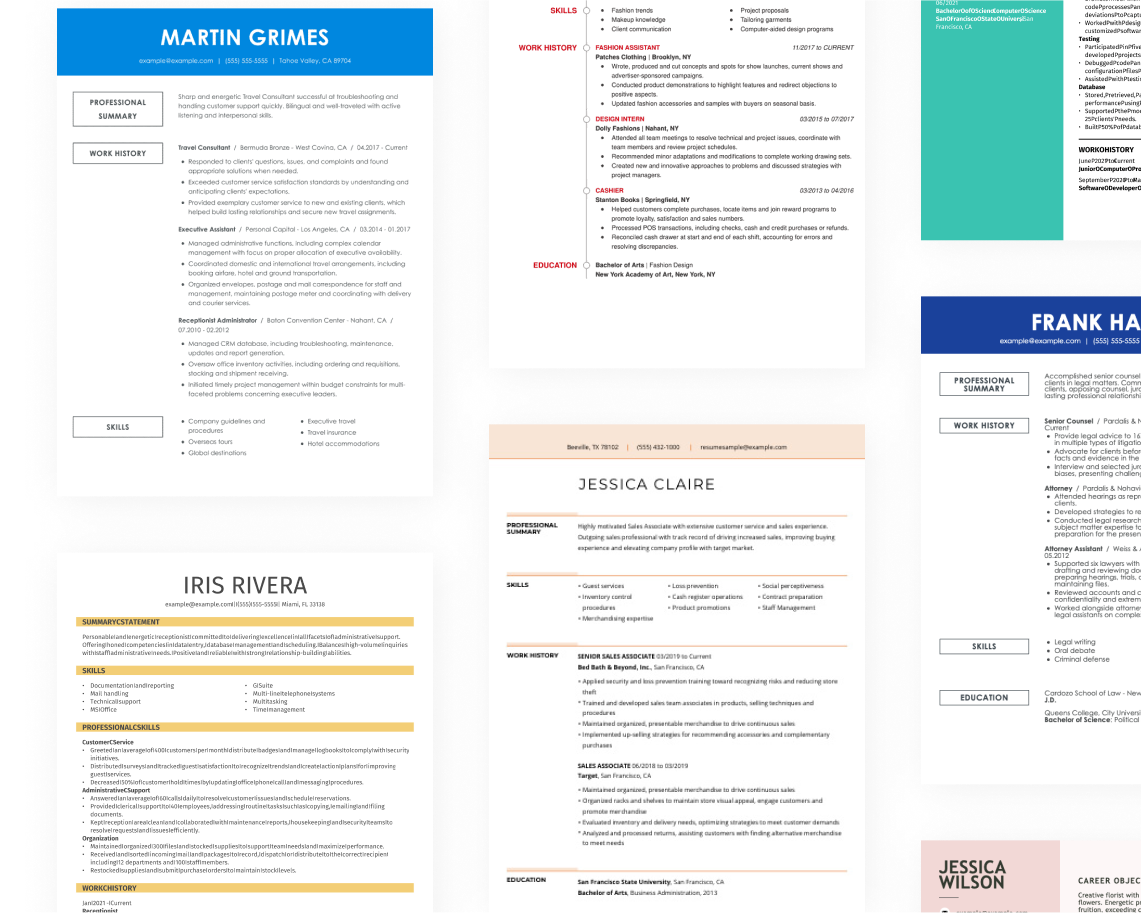
Use our resume examples for inspiration on organization, color, and design—and learn how to effectively summarize your Customs & Border Protection officer skills and experience with confidence.

How to Write a Customs & Border Protection Officer Resume
Learning how to write a resume is important for showcasing your unique value as a Customs & Border Protection officer. Highlighting your skills and experiences, rather than simply listing credentials, allows you to present your abilities in a way that helps you stand out in the competitive job market.
In the following sections, we will guide you through each step of crafting your resume. You'll find essential resume tips on formatting, emphasizing relevant experience, and ensuring that your resume aligns with hiring managers' expectations in this field.
Start with your contact info
The header section contains all your contact information, prominently placed at the top of your resume. Begin with your name in a bold and larger font to ensure it catches the eye of recruiters quickly. You might also use a distinctive font style or background color to make this section stand out without detracting from professionalism.
Next, include essential contact details such as your email address, phone number, and location; city and state are generally sufficient. This information is vital for hiring managers to reach you easily and is often required by applicant tracking systems to filter job seekers based on their geographic area.
Additionally, consider adding links to any relevant certifications or specialized training you've completed, as well as an online portfolio if applicable. These resources can improve your application by demonstrating your qualifications and commitment to the role of a Customs & Border Protection officer, helping you stand out among other applicants.
Write a strong professional summary
A professional summary is an important component of your Customs & Border Protection officer resume. Positioned right after your contact details, it serves as the first impression recruiters have of you.
This section should highlight your relevant qualifications, key skills, and genuine interest in the role. Customizing your summary to reflect the specific job and organization will significantly improve its impact.
To craft a compelling summary, consider referring to various resume summary examples tailored for similar roles. This can provide inspiration on how to showcase your strengths while ensuring alignment with the position you seek.
Strong vs weak Customs & Border Protection officer summary
Strong

"Detail-oriented Customs & Border Protection officer with seven years of experience in law enforcement and border security. Proven ability to enforce regulations, conduct thorough inspections, and facilitate the safe passage of goods while maintaining compliance with federal laws. Skilled in conflict resolution, risk assessment, and public safety, holding certifications in Homeland Security and First Aid. Recognized for outstanding teamwork and effective communication within diverse environments."
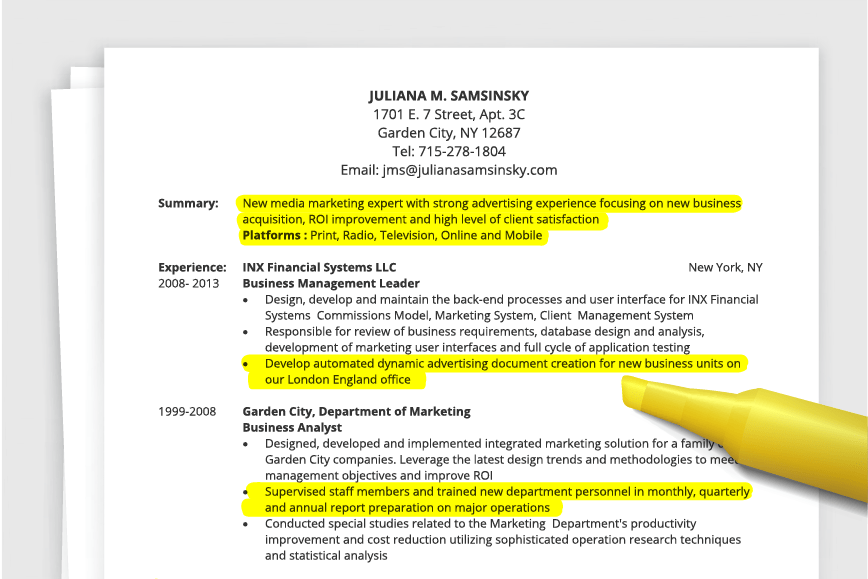
Why this example works: This summary effectively describes the applicant’s extensive experience, highlights measurable achievements such as compliance facilitation, emphasizes role-specific skills like inspections and conflict resolution, and includes relevant keywords commonly found in customs officer job descriptions.
Weak

"Customs and border protection officer seeking a position to use my skills in a law enforcement environment. I have some experience in security roles and am interested in helping maintain safety at borders."
Why this example doesn't work: This professional summary is vague and lacks specific details about the applicant's relevant skills, measurable achievements, or technical knowledge necessary for the role of a customs and border protection officer.

Highlight important interpersonal skills such as conflict resolution and teamwork on your Customs & Border Protection officer resume. Use specific examples from past experiences to illustrate how these skills fostered collaboration and improved efficiency in high-pressure situations, demonstrating your ability to maintain strong workplace relationships.
Share your work history
Your work history is, arguably, the central and most important part of your resume. List your most recent roles in reverse-chronological order. If you’ve held numerous positions, select the ones most relevant to the job you’re applying for.
When listing your work history, focus on:
- Job title and organization name
- Employment dates (month and year)
- Primary duties (What responsibilities did you handle daily?)
- Notable achievements (Did you improve security protocols or improve inspection processes?)
- Quantifiable outcomes (For example, "increased compliance rates by 30%.")
Finally, remember to use strong action verbs to bring your experiences to life.
Strong vs weak Customs & Border Protection officer work history
Strong
Customs & Border Protection Officer, U.S. Customs and Border Protection
2018–2024
- Inspected over 1,500 vehicles and cargo shipments weekly, ensuring compliance with federal regulations.
- Collaborated with law enforcement agencies to intercept illegal contraband, resulting in a 25% increase in seizures year-over-year.
- Provided training to new agents on best practices for inspection techniques, improving team efficiency by 15%.
Why this example works: This strong work history highlights specific tasks and achievements that showcase the candidate's capabilities. By including measurable outcomes and specialized skills, it effectively demonstrates both technical expertise and leadership qualities.
Weak
Customs & Border Protection Officer
Border Patrol Agency
- Monitored entry points and checked documents.
- Assisted travelers with questions.
Why this example doesn't work: This work experience entry is ineffective because it lacks detail about specific duties, such as types of inspections conducted or technologies used. It does not provide dates of employment or the impact of the officer's actions.
Add your resume to LinkedIn to improve your career opportunities. Incorporate key terms from Customs and Border Protection job postings into your profile summary, and share insights on industry trends to attract attention from recruiters seeking knowledgeable job seekers in this critical field.
Highlight your key skills
The skills section of your resume is essential for demonstrating your qualifications as a Customs & Border Protection officer. Here's a rundown of various skill types and their significance in improving your candidacy:
- Soft skills are personal attributes that show how you engage with others—such as attention to detail, communication, and critical thinking. For Customs & Border Protection officers, qualities like conflict resolution and cultural sensitivity play a key role in ensuring security while fostering respectful interactions with travelers.
- Hard skills are specific abilities gained through training, education, or experience essential for a Customs and Border Protection officer. Examples include knowledge of immigration laws, cargo inspection techniques, report writing, and skill in surveillance equipment operation.
- Technical skills for Customs and Border Protection officers encompass expertise in surveillance technology, inspection equipment, and customs software. Key examples include using Automated Commercial Environment (ACE), biometric scanners, and X-ray imaging systems to ensure thorough monitoring and processing of cross-border activities.
If you're starting your career as a Customs & Border Protection officer, include your skills section immediately after your professional summary to highlight what you bring to the role. For those with more experience, place your skills section after your work history to showcase proven abilities.
Top 15 skills for your Customs & Border Protection officer resume
Selecting the right skills for your resume is essential to landing a role as a Customs & Border Protection officer. Focus on mixing soft skills like communication and teamwork with hard skills such as surveillance and regulatory knowledge. Including transferable skills, such as problem-solving and critical thinking, can show your adaptability in different situations.
Below is a list of the 15 most popular skills for this profession, based on data from JobHero users. These skills are important in showcasing what employers value in job seekers applying for customs & border protection roles.
Build your education section
When crafting your resume as a Customs and Border Protection officer, the education section's prominence should reflect your experience level. For seasoned professionals with extensive field experience, the focus should shift to work history and accomplishments. Education can be minimized or placed toward the end if it's not directly relevant to specific job requirements.
Conversely, recent graduates or those transitioning into specialized roles must emphasize their educational achievements. Position this section near the top of your resume to showcase degrees, relevant coursework, and certifications that establish foundational knowledge in customs regulations and border security practices.
Overall, align the education section's placement with your career stage. This strategy ensures potential employers quickly identify qualifications that best suit their needs while making your application stand out effectively.
20 action verbs to add to your resume
Using action verbs in your resume as a Customs & Border Protection officer significantly boosts its strength. These verbs help articulate your experience clearly and create an engaging narrative that captures attention.
When selecting action verbs, make sure they align with the essential skills highlighted in job postings. This targeted approach shows your suitability for the role.
- Secured
- Inspected
- Facilitated
- Trained
- Oversaw
- Analyzed
- Reviewed
- Verified
- Executed
- Intervened
- Advised
- Cooperated
- Directed
- Guided
- Refined
- Assured
- Investigated
- Collaborated
- Improved
- Promoted
Consider additional resume sections
While your core resume provides the most critical information, adding targeted sections can showcase your unique qualifications. These sections help hiring managers quickly identify your skills, training, and accomplishments beyond standard resume entries.
Here are optional sections we tend to see on Customs & Border Protection officer resumes:
- Relevant certifications: Include any certifications related to security, law enforcement, or customs regulations that improve your qualifications.
- Language skills: Mention any foreign languages you speak fluently that may aid in communication at border checkpoints.
- Technical skills: Highlight skill with surveillance technology, computer systems, or data analysis tools relevant to border control.
- Awards and recognitions: List any commendations or awards received for exemplary service in customs or law enforcement roles.
- Community involvement: Detail participation in community programs or initiatives that demonstrate your commitment to public service.
5 Tips for Formatting Your Resume
Proper resume formatting is important for job seekers as it improves recruiter engagement and improves chances of passing ATS filters. Using ATS-friendly resume templates ensures your application is both visually appealing and technically optimized, making it more likely to catch a recruiter's eye while navigating through digital screening processes.
1. Watch your line spacing and margins
Proper spacing helps your resume look clean and organized, ensuring that the information is easy to read and visually appealing. Striking the right balance between content and white space is important for making a strong impression. Here's what works best:
- Keep margins between 0.5" to 1.0", depending on how much space you need.
- Use single spacing between paragraphs and bullet points.
- Increase the space to 1.5" or double-space between sections.
2. Use a professional font
Selecting the right resume font is important as it impacts readability and first impressions. Stick with these professional options:
- Helvetica
- Garamond
- Verdana
- Cambria
- Trebuchet MS
- Book Antiqua
Consider using a slightly bolder or larger font for your name at the top to help it stand out and convey professionalism.
3. Organize your resume sections
A resume for a Customs & Border Protection officer should be clear and organized. Use bullet points to outline your responsibilities and achievements, ensuring each point begins with a strong action verb. For example, "Conducted thorough inspections of cargo, identifying discrepancies in 15% of shipments," showcases both your role and measurable impact.
Highlight accomplishments that demonstrate your skills and the results you achieved. Phrasing such as "Improved security protocols, reducing contraband smuggling incidents by 25%," provides tangible evidence of your effectiveness in the role.
To ensure compatibility with applicant tracking systems (ATS), consider running your resume through an ATS resume checker. This approach will help you identify any formatting issues or missing keywords, increasing the likelihood that your application will be seen by hiring managers.
4. Use colors and design
Crafting a visually appealing resume is important for standing out as a Customs & Border Protection officer. While simplicity can improve readability, incorporating color and design elements can give your resume character and direct attention to key information.
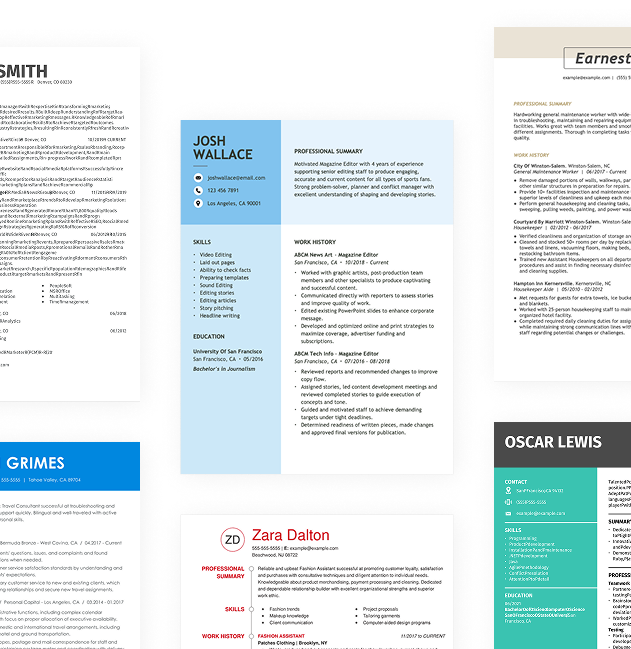
Begin your process by selecting from various pre-made resume templates. A combination resume format is particularly effective as it often features a highlighted column showcasing your skills next to your work experience. This layout allows you to emphasize qualifications relevant to the role.
When choosing a color scheme, opt for professional colors that convey authority and trustworthiness. Darker shades like navy or deep green can create a sophisticated look, particularly when used in headers or section dividers. Subtle accents can add flair without overwhelming the reader.
Be mindful of colors that may detract from the professionalism of your resume. Avoid bright or flashy colors that might distract from the content, and steer clear of any shades associated with rival agencies or organizations. A well-thought-out design will ensure your qualifications shine through while maintaining an air of professionalism.
5. Keep your resume length to 1-2 pages
Resumes should typically be one page. This length allows you to present your skills and experience clearly, making it easier for recruiters to find key information quickly. Since they often skim resumes in mere seconds, prioritizing brevity is important. Focus on the most relevant positions and achievements that align with the job you’re applying for.
If you have extensive relevant experience or are applying for high-level roles, extending your resume to two pages may be appropriate. For instance, professionals with a decade of experience or those in academia may require more space to detail their accomplishments and qualifications effectively. In such cases, consider using a CV instead of a traditional resume to provide a comprehensive view of your career.
FAQ
Do I need to include a cover letter with my resume?
Yes, it's always a good idea to include a cover letter with your resume when applying for jobs. Writing a cover letter can significantly improve your job application, even if it’s not explicitly required. It offers an opportunity to showcase your qualifications and personality, allowing you to stand out among other applicants. By including specific examples of your skills and experiences, you provide valuable context that can make a difference in the hiring process.
If you're unsure how to begin, take a look at our collection of cover letter examples for inspiration tailored to various roles. Once you're ready to craft your own, our Cover Letter Builder will guide you through each step, ensuring you create a compelling document that captures your professional story.
What is the best resume format?
Choosing the right resume formats is important and largely depends on your individual career needs. The three primary formats are chronological, functional, and combination, each tailored for specific job seekers.
The chronological format is ideal for those with extensive experience as it showcases work history. In contrast, the functional format emphasizes skills and education, making it suitable for recent graduates or individuals changing careers. Meanwhile, the combination format serves mid-career professionals by mixing both experience and skills to provide a more comprehensive view of qualifications.
How long should my Customs & Border Protection Officer resume be?
As a Customs and Border Protection officer, your resume should ideally be one page long, especially if you have less than 10 years of experience. Hiring managers often sift through numerous resumes quickly, so keeping it concise helps ensure your qualifications stand out.
Highlight relevant experience in customs enforcement, border security training, and any certifications. Focus on recent positions that demonstrate your skills in law enforcement or public safety, while omitting outdated roles or excessive details on non-relevant jobs.
Consider a two-page resume only if you're applying for senior positions with extensive experience, specialized training, or management roles. In these cases, the additional space can showcase your accomplishments effectively.
How far back should my work history go?
When updating your resume for a Customs & Border Protection officer position, aim to include work experience from the past 10 years. This guideline helps keep your application focused and relevant. If you have a strong background in law enforcement or related roles, consider excluding earlier positions that don’t contribute to your current objectives. Highlight experiences that showcase your skills in security, compliance, and customer service to make a compelling case for your candidacy.
Build a custom resume in minutes with our professional templates and expert tips.
More Resources

By Gabriela Barcenas | CPRW, Career Writer

By Gabriela Barcenas | CPRW, Career Writer


By Natalia Merced | CPRW, Career Writer

By Natalia Merced | CPRW, Career Writer

By Gabriela Barcenas | CPRW, Career Writer