-
-
Sort through our administrative resume examples to see what works best for you.
-
Our sales resume examples can help you write the best possible resume.
-
Explore our food service resume examples to show your skills effectively.
-
Start crafting your job-winning resume with our teaching resume examples.
-
-
-
Use our administrative cover letter examples for ideas on writing your own.
-
Use our sales cover letter examples to effectively show your sales accumen.
-
Write your job-winning cover letter following our nursing cover letter examples.
-
Learn to tell your story in education using our teaching cover letter examples.
-



How to Make a Cover Letter: Step-by-Step Guide & Examples
Follow our easy eight-step guide to create a cover letter that complements your resume and impresses employers by detailing your best qualifications.

- Our customers have been hired by*

A strong cover letter enhances your resume, showcases your personality, and highlights your work ethic to stand out. Learn how to write a cover letter with these helpful tips and matching examples.
1
What Is a Cover Letter?
A cover letter is a formal application letter that expands on what you wrote in your resume. It’s an excellent opportunity to pique a potential employer’s interest!
This three- to four-paragraph document should highlight specific skills and accomplishments that make you an ideal candidate, but most importantly, showcase what you can offer to the company and how its work aligns with your career goals.
2
Prepare to Write Your Cover Letter
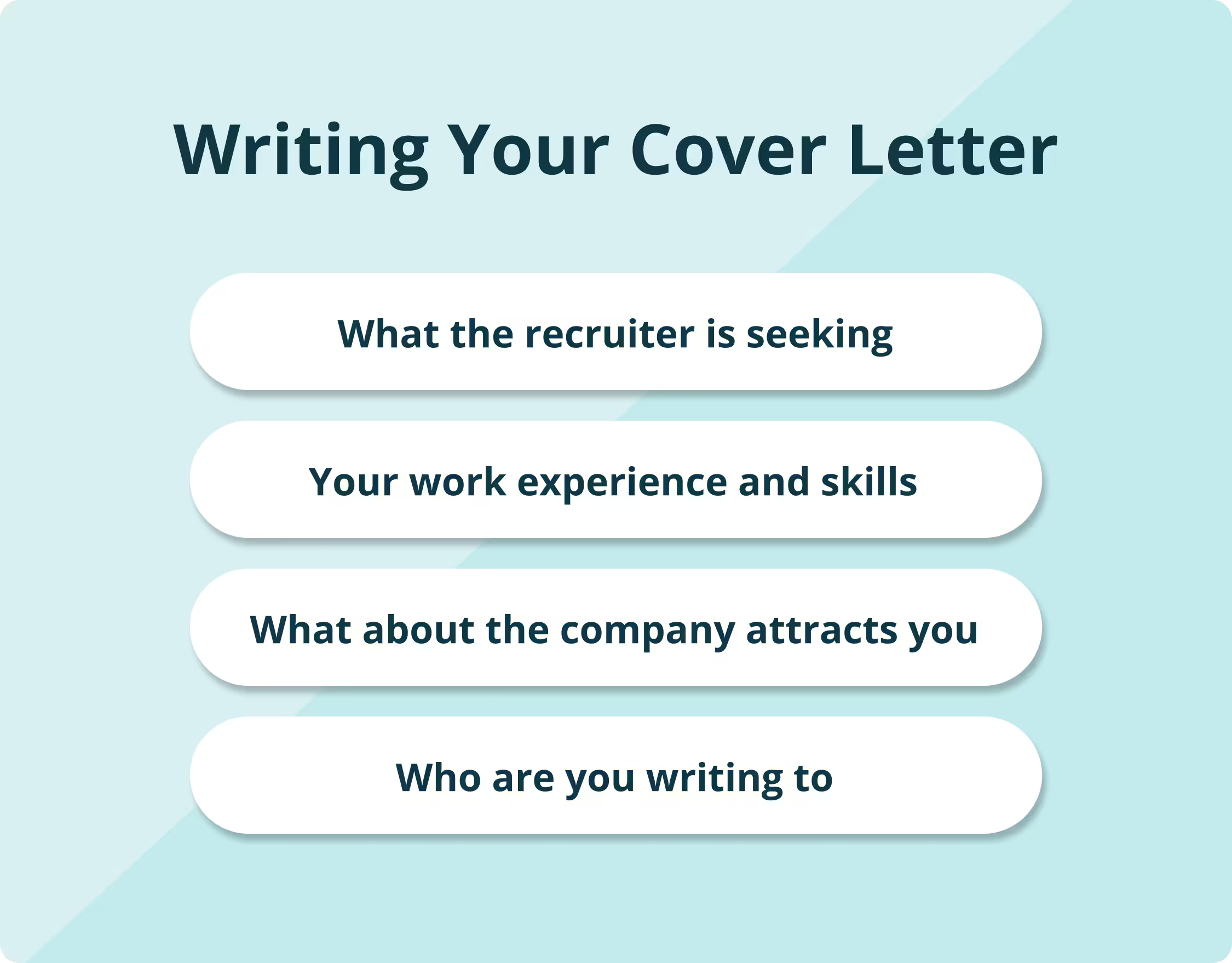
Learning how to write a great cover letter requires research and preparation. After all, if you want to demonstrate what makes you the best job candidate, you’ll need to give it your best. So, before you start your cover letter, keep these key points in mind:
3
How to Write a Cover Letter for a Job
Once you have all the necessary information, start writing your cover letter with this step-by-step guide.
Step 1: Choose the right template
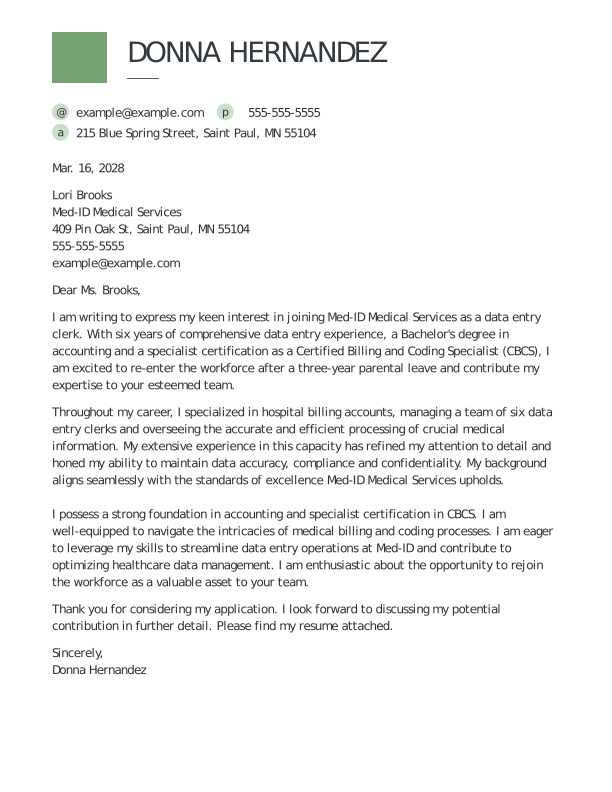
Match your cover letter to your resume template. A well-formatted, visually pleasing template can make a lasting impression. Check out how this job seeker maintained a consistent look throughout their job application:
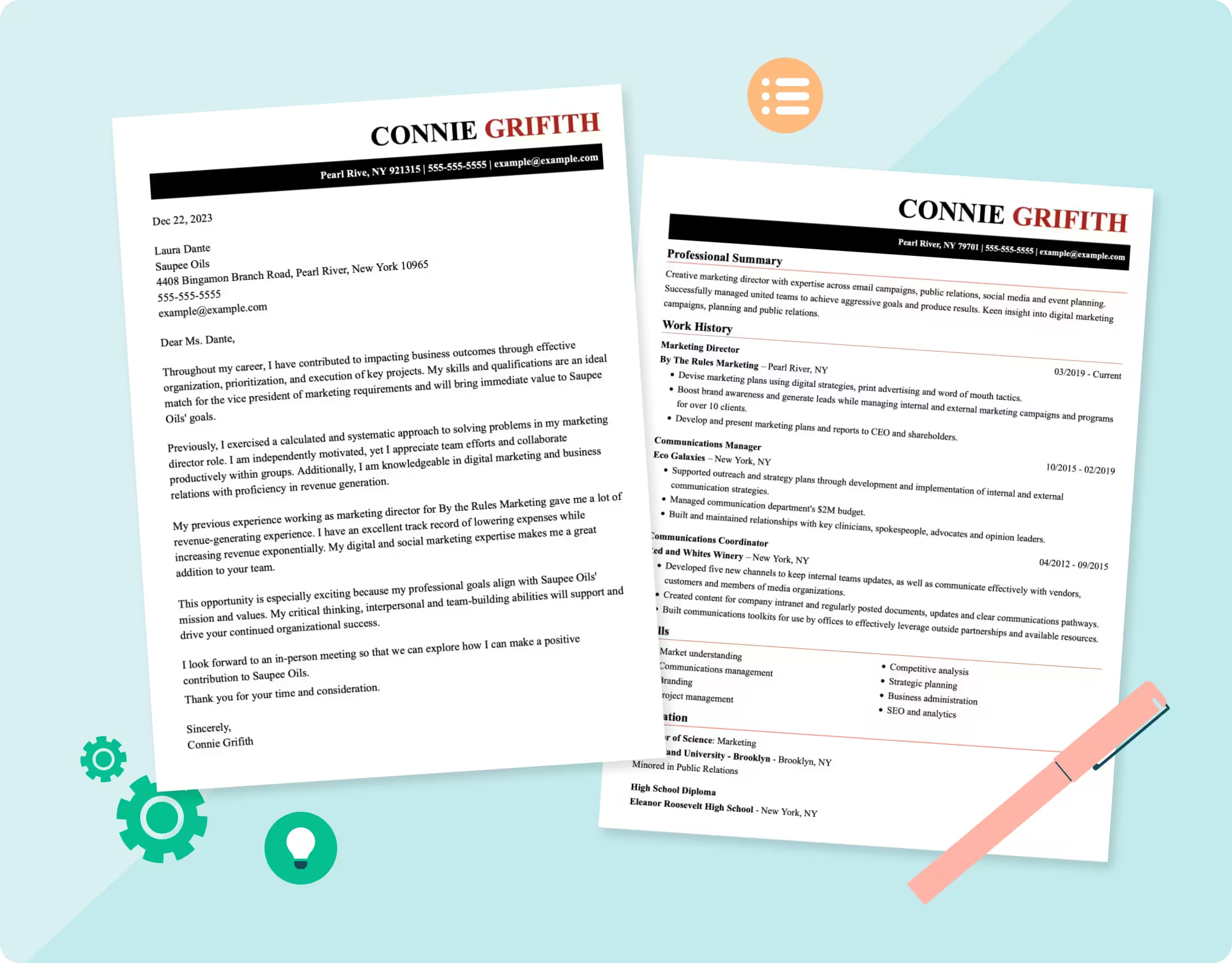
Explore our library of free cover letter templates to get a headstart on these cohesive looks.
Step 2: Format your cover letter
A well-formatted cover letter signals professionalism and ensures your message is easy to read. Follow these formatting rules to construct your letter.
- Keep it to one page. Aim for three to four concise paragraphs, totaling 250 to 400 words, that highlight your qualifications without overwhelming the reader.
- Use a professional font. Stick to clean, easy-to-read fonts like Arial, Calibri, or Times New Roman in 10–12 point size.
- Align text to the left. Left alignment improves readability and looks professional.
- Use standard margins. Keep margins around 1 inch on all sides.
- Include a clear subject line or header (for email applications). Example: “Application for Preschool Teacher – [Your Name].”
- Proofread carefully. Check for typos, grammar errors, and consistent formatting before sending.
Step 3: Write your header
A cover letter header usually includes your name, mailing address, and the recipient’s contact information. If you submit your cover letter and resume via email or an online application portal, delete your mailing address and only include your full name, phone number, professional email address, and current city and state.
For the recipient’s contact information, include the hiring manager’s full name, job title, company name, and work address. This step requires a little extra research. Here are two ways to find this information:
- Scan the job posting. Carefully review the job description. Not only will the posting include resume keywords that highlight the most desired skills for the job, but it may also include the hiring manager’s name and contact information.
- Search the company directory or LinkedIn. If the job advertisement doesn’t feature the name of the recruiter, you’ll need to do a little research. Find out which department or office the open job is based in and use that information to identify the head of that department.
Here’s how it should look:
Alex Cohen
(555) 367-8967
alexcohen@email.com
San Francisco, CA
Jan. 7, 2026
Priya Walker
Director of Marketing
Wales Advertising
123 Orchard Drive
San Francisco, CA
Step 4: Address your cover letter
Once you have the recipient’s full name, address your cover letter using the formal “Dear [recipient’s full name].” Other appropriate cover letter greetings include:
- Dear [Job Title]’s Hiring Manager,
- Dear Head of [Job Title’s Department],
- Dear [Department] Recruiter,
- Dear [Recruiter’s Name],
- Dear Hiring Manager,
- Greetings,
Avoid outdated greetings like “To Whom It May Concern” and “Dear Sir or Madam.”
Step 5: Write a strong introduction
Think of your opening as a personal statement. In just a few sentences, you want to show who you are, why you’re excited about the role, and what makes you a strong match. A clear, confident opening encourages the hiring manager to keep reading.
A cover letter introduction should briefly cover:
- Who you are as a professional
- Why you’re interested in the company or role
- How your skills and work experience make you a good fit
Check out these sample introductions:
Content creator
As a content creator with over 5 years of experience producing SEO-driven articles, social media campaigns, and brand storytelling, I’m excited by the opportunity to contribute to a team that values thoughtful, audience-first content. What immediately drew me in was your recent rebrand and the way your blog blends practical career advice with a warm, human tone—an approach that closely mirrors my own work. I bring a strong track record of growing organic traffic, adapting content for multiple platforms, and collaborating with editors and designers to deliver consistent, high-quality results.
Preschool teacher
As a preschool teacher with 7 years of experience creating engaging, play-based learning environments, I’m excited about the opportunity to support young learners during this critical stage of development. I was especially drawn to your program’s emphasis on social-emotional learning and small classroom ratios, which allow teachers to build meaningful, individualized connections with each child. My background in early childhood education, classroom management, and family communication will enable me to create a safe, nurturing space where children feel confident to learn, explore, and grow.
Step 6: Tailor your cover letter body
Use the following one or two paragraphs to briefly emphasize your experience using practical, concise examples of your career accomplishments. Here’s how to do it effectively:
- Respond to the needs of the job. You should already have a list of relevant skills and accomplishments that meet the job requirements. Now, describe these qualifications and achievements in detail to showcase that you’re the ideal candidate for the role.
- Use the STAR method. This acronym stands for: Situation, Task, Action and Result. The STAR interview method is a great way to present yourself as a proactive problem-solver and highlight additional achievements.
Let’s continue with the same examples:
Content creator
In my previous role, I was responsible for increasing organic traffic for a career-focused content hub that was struggling with low engagement (Situation). I was tasked with improving search visibility while maintaining a conversational, reader-friendly tone (Task). To do this, I conducted keyword research, refreshed underperforming articles, and introduced a clearer content structure aligned with search intent (Action). Within 6 months, organic traffic increased by 42%, and several articles began ranking on the first page of search results, contributing to sustained audience growth (Result).
Beyond SEO performance, I bring a collaborative and adaptable approach to content creation. I have experience working closely with editors, designers, and marketing teams to ensure content aligns with brand voice and business goals. Whether developing long-form guides, email campaigns, or social media copy, I focus on clarity, accuracy, and usefulness—creating content that not only performs well but genuinely helps readers take the next step in their careers.
The body paragraphs work because they highlight measurable achievements using the STAR method, demonstrating problem-solving skills and tangible results. In contrast, the second paragraph emphasizes collaboration and versatility. Overall, it balances professionalism with a personal touch, making the candidate memorable and credible.
Preschool teacher
In my classroom, I prioritize creating a nurturing, structured environment where children feel safe to explore and express themselves. I have experience designing age-appropriate lesson plans that support early literacy, motor development, and social skills through hands-on activities and guided play. By maintaining consistent routines and clear expectations, I help children build confidence while supporting diverse learning styles and developmental needs.
I also place strong emphasis on communication and partnership with families. I regularly share updates on student progress, collaborate with parents on developmental goals, and work closely with fellow educators to ensure consistency across the classroom. My approach combines patience, creativity, and attentiveness, allowing me to support each child’s growth while contributing positively to a team-oriented school environment.
These body paragraphs clearly outline the candidate’s teaching experience, classroom strategies, and commitment to child development. The focus on family communication and teamwork demonstrates that the candidate can contribute to a supportive learning community. The overall tone is caring and confident, which is exactly what schools look for in early childhood educators.
Step 7: End with a call to action
Your final paragraph should reassure the hiring manager of your interest in the open job. Additionally, it should include an invitation to reconnect in an interview. Use this opportunity to add your availability and your contact information. Let’s finish the previous examples
Content creator
I am excited about the opportunity to bring my content creation skills and results-driven approach to your team. I would welcome the chance to discuss how my experience can support your goals and contribute to your continued growth. I am available for a conversation at your convenience and can be reached at [your phone number] or [your email address]. Thank you for considering my application—I look forward to connecting soon.
Preschool teacher
I am enthusiastic about the possibility of joining your school and supporting the growth and development of your students. I would love the opportunity to discuss how my teaching experience and approach can benefit your classroom. I am available for an interview at your convenience and can be reached at [your phone number] or [your email address]. Thank you for your time and consideration—I look forward to speaking with you.
Step 8: Sign off
Conclude your cover letter with a formal farewell and typed signature. Appropriate signoffs could include:
- Thank you for your time,
- Thank you,
- Best,
- Kind regards,
Cover Letter Examples
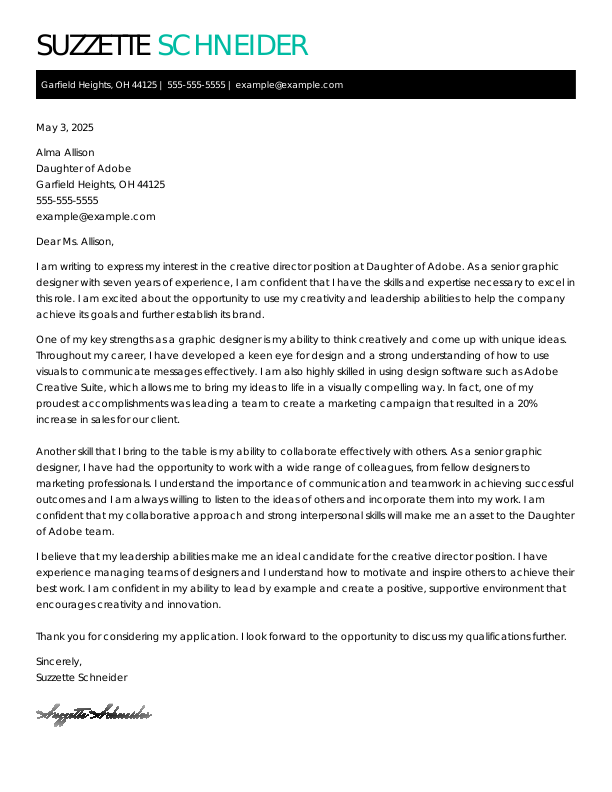
Senior graphic designer
This graphic designer uses the cover letter to showcase their work and digital portfolio.
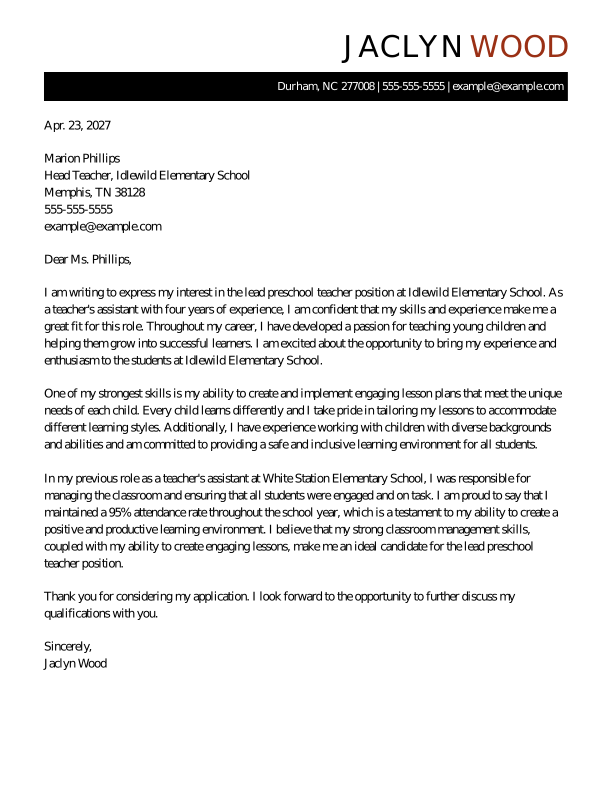
Preschool teacher
This teacher uses their cover letter to outline their career highlights and subject matter expertise.
5
Key Takeaways
Hopefully, this guide on how to write a good cover letter will help you write a quick, persuasive letter. Consider the tips we discussed to take your cover letter to the next level:
FAQ
How do I write a cover letter with no experience?
To write an effective cover letter without formal job experience, focus on transferable skills such as:
- Teamwork
- Time management
- Customer service
- Basic math skills
- Physical stamina
- Tutoring skills
How do I write a cover letter without a name?
Tailoring your cover letter is essential to making an impression. We always recommend taking the time to research the recipient’s name. That being said, if after hours of research, you still can’t find their name, the appropriate way to address your cover letter is using the following:
- Dear Hiring Manager,
- Dear Head of [Department],
- Dear [Department] Recruiter,
How can you make your cover letter stand out?
To write a standout cover letter, review the job description carefully and look for “resume keywords.” You can find these keywords by looking for repeated phrases or highlighted responsibilities throughout the job advertisement.
These words or phrases are used by applicant tracking systems (ATS) and hiring managers to rate applicants. Strategically placing them throughout your cover letter reassures hiring managers that you carefully read the descriptions and thoughtfully consider what qualifications you feature.
What are the three main things needed in a cover letter?
A cover letter must make a lasting impression, market yourself as the ideal candidate, and encourage the reader to follow up. Here’s what you need to include to achieve this:
- Attention-grabbing and dynamic introduction
- A direct and concise body that details the candidate’s qualifications
- An invitation to continue the conversation via an interview, including the candidate’s contact information and availability
How do I write a cover letter for an internship?
To write an effective internship cover letter, provide transferable skills based on your academic training or previous experience.
For example, this second-year business student advertises their data analysis and business strategy knowledge to conceptualize a potential marketing campaign their employer might use. This strategy demonstrates how this intern applicant is already applying their education and training to benefit their potential employer.
“As a business management student, I am excited to apply for New Wave’s summer internship program. I look forward to applying my data analysis knowledge and developing a business strategy based on the exciting developments you and your current product team are creating. I look forward to working with your team and my fellow summer associates to draft an aggressive product marketing campaign you can adopt soon.”

Learn About Our Writing Standards
Editorial Standards
JobHero has published in-depth career guides, resume and cover letter articles since 2014. We aim to share job-seeking tools and empower job seekers throughout their careers! Visit our Editorial Process to see how our authors research, write and revise our articles.
Natalia Merced
CPRW, Career WriterNatalia is a Certified Professional Resume Writer (CPRW) and member of the Professional Association of Resume Writers & Career Coaches and has worked in the career industry for more than two years providing comprehensive guidance on resume writing and job search strategies for individuals across diverse career paths. She holds a master's degree in counseling psychology and a bachelor's degree in public relations and advertising and is passionate about helping job seekers present their professional story effectively through well-crafted resumes and cover letters that demonstrate their value, skills, and experience to potential employers. Some of her work has been featured on JobHero's resume examples career center.
Helpful Resume Articles


By Gabriela Barcenas | CPRW, Career Writer


By Gabriela Hernandez | CPRW, Career Writer