-
-
Sort through our administrative resume examples to see what works best for you.
-
Our sales resume examples can help you write the best possible resume.
-
Explore our food service resume examples to show your skills effectively.
-
Start crafting your job-winning resume with our teaching resume examples.
-
-
-
Use our administrative cover letter examples for ideas on writing your own.
-
Use our sales cover letter examples to effectively show your sales accumen.
-
Write your job-winning cover letter following our nursing cover letter examples.
-
Learn to tell your story in education using our teaching cover letter examples.
-






- Our customers have been hired by*


Entry-Level Government Resume
This resume example effectively showcases strategic policy development and community engagement, making it ideal for recent graduates and career changers aiming to excel in government roles.

Why this resume works:
Highlights policy analysis, project management, and community development skills over experience gaps.

Mid-Career Government Resume
This resume example is perfect for government professionals seeking to leverage their experience and achievements to advance into leadership roles or specialize further in public policy.
Why this resume works:
This applicant highlights a track record of improving outcomes across multiple settings.

Experienced Government Resume
Ideal for experienced professionals aiming to advance into leadership roles, showcasing expertise in budget management and policy development.
Why this resume works:
Leadership roles and advanced certifications underscore the ability to manage complex scenarios.

Looking for something else?
Create Your Standout Resume Today
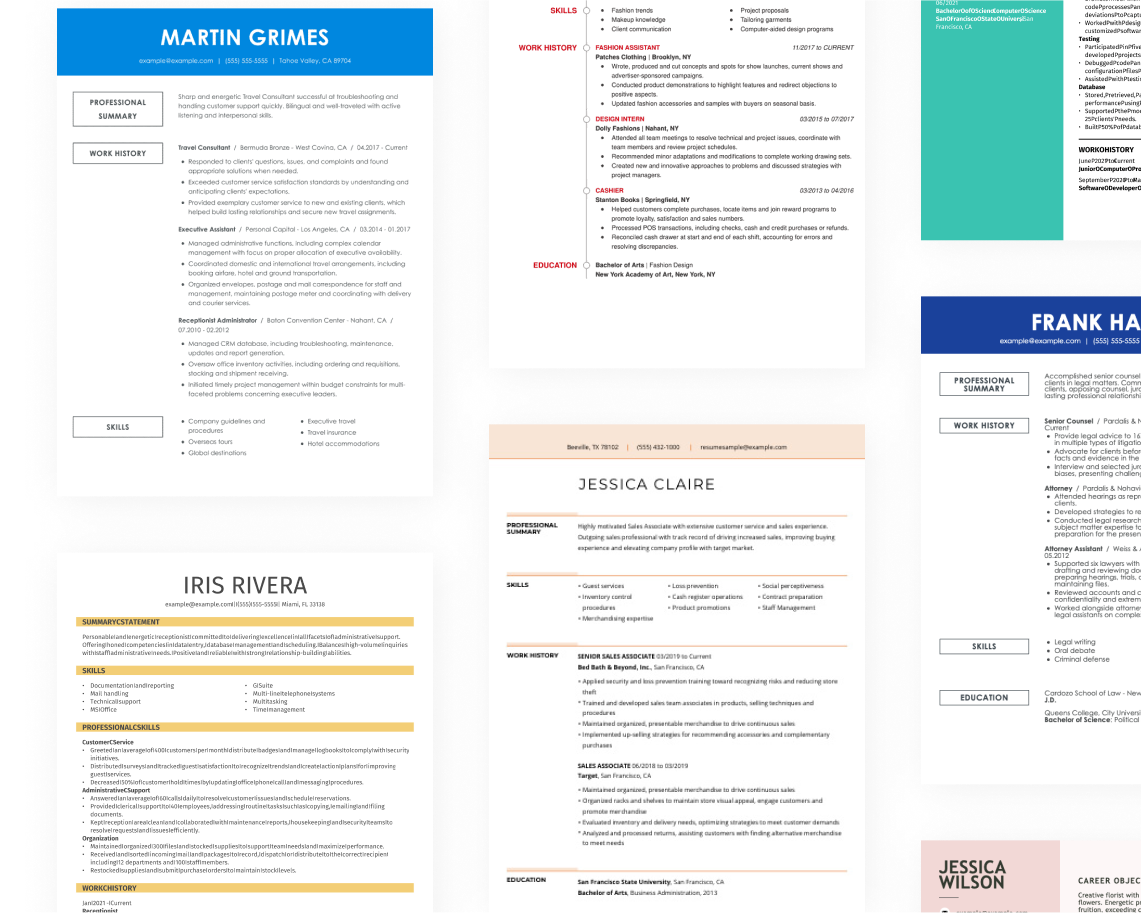
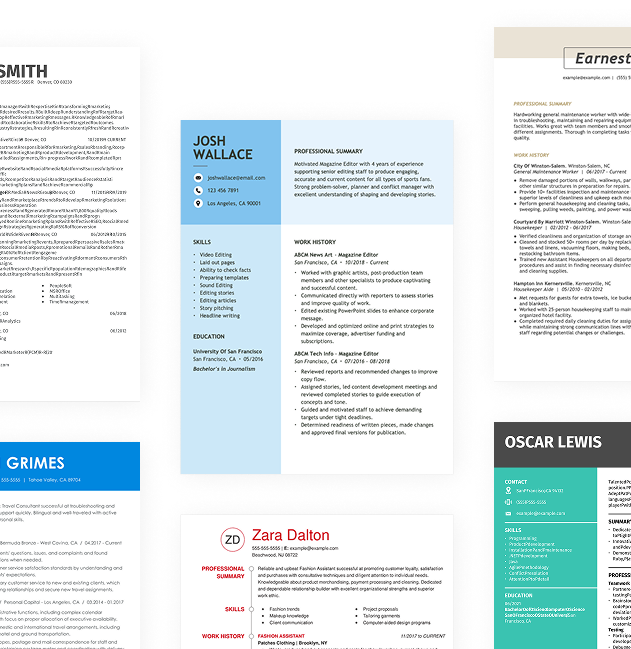
Use our resume examples for inspiration on organization, color, and design—and learn how to effectively summarize your government skills and experience with confidence.

How to Write a Government Resume
Knowing the significance of how to write a resume is important for presenting your unique value in government roles, beyond merely listing qualifications. It allows you to emphasize the skills and experiences that make you an ideal job seeker.
In the following sections, you'll receive step-by-step guidance along with valuable resume tips suited for government positions. Discover key strategies from structuring your document to highlighting essential competencies and achievements effectively.
Start with your contact info
The header section contains all your contact information, prominently displayed at the top of your resume. Start with your name in a bold, larger font to ensure it catches the eye of recruiters. You may also want to use a clean and professional design that aligns with government standards, which often favor straightforward formatting.
Next, include essential contact details such as your email address, phone number, and location—city and state are sufficient. This information is vital for recruiters to reach you easily and ensures compliance with application protocols often found in government job postings.
Lastly, consider adding links to relevant certifications or training programs that pertain to government roles. If applicable, an online portfolio showcasing work related to public service or community projects can further improve your profile by demonstrating your commitment and experience in the field.
Write a strong professional summary
A professional summary serves as your first impression on a government resume, located right beneath your contact details. This section is important as it introduces you to potential employers and sets the tone for the rest of your application.
In your summary, focus on highlighting your key qualifications, relevant skills, and sincere interest in the role. Tailoring this section to align with the specific government position can significantly improve its effectiveness and demonstrate your suitability.
To craft a compelling summary, consider reviewing various resume summary examples. These resources can provide inspiration on organization and content that resonates well with hiring managers in the government sector.
Strong vs weak government summary
Strong

"Results-driven government professional with over eight years of experience in public policy and program management. Proven track record of developing initiatives that improve community engagement and increase departmental efficiency by 25%. Skilled in data analysis, stakeholder communication, and regulatory compliance, holding a Master’s degree in Public Administration. Recognized for leading cross-functional teams to successfully implement strategic projects."
Why this example works: This summary clearly outlines the job seeker’s extensive experience, highlights measurable accomplishments like increased efficiency, showcases relevant skills such as data analysis and stakeholder communication, and incorporates essential keywords applicable to government roles.
Weak

"Government employee seeking a position where I can apply my skills and contribute to public service. I have experience in administrative roles and enjoy working with others."
Why this example doesn't work: This professional summary is weak due to its generic language and failure to highlight specific skills, accomplishments, or relevant experience in the field of government.

Highlight your interpersonal skills such as collaboration and conflict resolution on your government resume. Use specific examples to illustrate how these skills led to successful project outcomes or improved community relations, showcasing your ability to foster positive connections in a public service environment.
Share your work history
Your work history is, arguably, the central and most important part of your resume. List your most recent roles in reverse-chronological order. If you’ve held numerous positions, select the ones most relevant to the job you’re applying for.
When listing your work history, focus on:
- Job title and organization name
- Employment dates (month and year)
- Key responsibilities (What did you do on a daily basis?)
- Notable achievements (What contributions did you make? Did you improve processes or services?)
- Quantifiable outcomes (Use figures when possible, such as "increased service efficiency by 30%.")
Finally, remember to use strong action verbs to effectively convey your experiences.
Strong vs weak government work history
Strong
Policy Analyst, Department of Justice
2018–2023
- Conducted in-depth analysis of 50+ policy proposals, providing actionable recommendations that improved legislative outcomes by 25%.
- Collaborated with cross-functional teams to develop a comprehensive report on criminal justice reform, influencing state-wide policy changes.
- Presented findings to stakeholders and policymakers, improving public understanding of key issues and increasing engagement by 40%.
Why this example works: A strong work history section highlights specific achievements and quantifiable results, showcasing both the analytical skills required for a Policy Analyst position and the ability to drive powerful change. Detailed accomplishments demonstrate not only expertise but also the capacity for leadership in complex environments.
Weak
Government Employee
Local Government Office
- Handled various tasks and attended meetings.
- Managed paperwork for different departments.
Why this example doesn't work: The weak work history example lacks specific job title or department, provides no dates, and describes generic tasks that could fit many roles.
Highlight your leadership skills by including examples such as "Oversaw community outreach programs" or "Directed policy development initiatives." These specifics show your ability to lead teams and influence decision-making effectively in the government sector.
Highlight your key skills
The skills section of your resume is essential for demonstrating your qualifications in the government sector. Here's a rundown of various skill types and their significance in improving your candidacy:
- Soft skills are personal attributes that reflect how you collaborate with others—like negotiation, diplomacy, and problem-solving. In government roles, qualities such as adaptability and strong communication are important because they help navigate complex issues and foster effective relationships within the community.
- In government roles, hard skills are specific abilities gained through formal education or practical experience. Examples include data analysis, policy development, project management, and public speaking.
- Technical skills are essential for a government professional, encompassing skill with specific software and systems. Examples include budget management tools (like SAP), compliance tracking systems, and data analysis platforms (such as Tableau).
For new government professionals, position your skills section at the top to highlight your strengths despite limited experience. For seasoned workers, place it after work history to showcase proven abilities.
Top 15 skills for your government resume
When preparing your resume for government positions, it's important to highlight skills that align with the requirements of the role. Focus on a mix of soft skills, such as teamwork and communication, alongside hard skills like policy analysis and project management. Including transferable skills can improve your appeal across different government roles.
Below is a list of the 15 most in-demand skills for job seekers aiming for government jobs, based on insights from JobHero users. These skills will help you demonstrate your qualifications effectively and stand out in a competitive job market.
Build your education section
When crafting your resume, the education section's prominence will vary based on your experience level and industry demands. For seasoned professionals with extensive work histories, it’s often beneficial to minimize the education section. Focus instead on detailing your relevant experience and achievements, positioning education toward the end or omitting it if not required.
Conversely, for recent graduates or individuals entering specialized fields, education can be a critical asset. Highlight this section prominently at the top of your resume to showcase degrees, certifications, and relevant coursework that demonstrate your qualifications.
Remember to tailor your approach depending on the job requirements. If further expertise is essential in government roles, consider including any additional training or workshops that reinforce your educational background and align with the position you seek.
20 action verbs to add to your resume
Using action verbs in your resume significantly improves its strength by effectively communicating your experiences and accomplishments. These verbs create a dynamic tone that captures the attention of hiring managers, making your qualifications stand out.
When tailoring your resume for government positions, focus on action verbs that reflect the essential skills outlined in job descriptions. This approach demonstrates alignment with the role's requirements and showcases your readiness to contribute effectively.
- Regulated
- Oversaw
- Facilitated
- Analyzed
- Directed
- Executed
- Partnered
- Informed
- Promoted
- Led
- Reviewed
- Supplied
- Guided
- Coached
- Presented
- Sustained
- Corresponded
- Reacted
- Guaranteed
- Improved
Consider additional resume sections
In addition to the essential details on your resume, incorporating optional sections can highlight your distinctive strengths. These additions allow employers to quickly recognize your skills, relevant experiences, and accomplishments that extend beyond typical resume entries.
Here are some optional sections frequently found on government resumes:
- Policy areas: Specify particular policy sectors you have worked in (healthcare, education, environment) to demonstrate your focused expertise.
- Certifications and trainings: List any relevant certifications or specialized trainings (Project Management Professional, Lean Six Sigma) that improve your qualifications.
- Professional development: Highlight recent workshops or courses attended that reflect your commitment to continuous improvement in public service.
- Achievements and awards: Detail recognitions you've received for outstanding performance or contributions to public initiatives.
- Community involvement: Include volunteer work or engagement with community organizations that showcases your dedication to public service.
5 Tips for Formatting Your Resume
Proper resume formatting is important for job seekers as it improves visual appeal and ensures clarity. Using ATS-friendly resume templates can significantly improve chances of passing initial screenings while keeping recruiters engaged with a polished presentation.
1. Watch your line spacing and margins
Proper spacing helps your resume look clean and organized, making it easier for hiring managers to read. Properly spaced resumes create a professional appearance while ensuring that information is easily digestible. Here's what works best:
- Keep margins between 0.5″ to 1.0″ to ensure your content fits well on the page.
- Use single spacing between paragraphs and bullet points for clarity and readability.
- Increase space to 1.5″ or double-space between sections to visually separate different parts of your resume.
2. Use a professional font
Choosing the right resume font for your government job application can greatly impact its readability and professionalism. Opt for fonts that convey clarity and structure, such as:
- Helvetica
- Verdana
- Cambria
- Garamond
- Lucida Sans
- Bookman
To give your name a distinctive presence at the top, consider using a slightly thicker font or style.
3. Organize your resume sections
A resume for a government position should be clear and easy to read. Break down your experience using bullet points to highlight specific responsibilities and achievements rather than lengthy paragraphs. Start each bullet with a strong action verb, such as "Developed policies," to convey your proactive role in the government sector.
Focusing on measurable accomplishments is important in this field. For instance, "Led a project that reduced community response times by 25%" not only details what you did but also demonstrates the impact of your work. Quantifying results helps potential employers see the value you bring.
To ensure compatibility with ATS, use an ATS resume checker to verify that your resume meets industry standards for keywords and formatting. This step increases your chances of being selected for interviews in a competitive job market.
4. Use colors and design
When crafting a resume for the government sector, incorporating color and design elements can make your application stand out while maintaining professionalism. A polished resume not only reflects your qualifications but also shows attention to detail.
Begin by selecting a resume template that suits the structure of your information. The combination resume format is particularly effective, as it allows you to emphasize skills prominently alongside your experience in a visually appealing way.
Next, choose an appropriate color scheme. Opt for subdued tones such as dark green or navy blue that convey stability and trustworthiness. These colors can be used minimally to accentuate section headings or borders without overwhelming the reader.
It's essential to avoid bright or flashy colors that may detract from the content's clarity. Additionally, steer clear of colors associated with political parties or any hues that could create confusion with existing government branding. Focus on creating a balanced and professional look to effectively communicate your qualifications for the role.
5. Keep your resume length to 1-2 pages
Resumes should typically be one page long, as this is the optimal length for catching a recruiter’s attention. Most recruiters scan resumes quickly, often in less than 10 seconds. A concise format allows you to highlight your most relevant experiences and skills effectively.
Focus on including only recent positions that align with the job you're targeting. Avoid redundancy by not listing similar duties under different roles. Prioritize achievements and responsibilities that showcase your suitability for the position.
In certain scenarios, extending your resume to two pages can be justified. For example, applicants with extensive experience applying for senior roles may need additional space to detail their contributions. Academic positions might require a CV instead of a traditional resume due to their comprehensive nature.
FAQ
Do I need to include a cover letter with my resume?
Even if a cover letter isn't required, taking the time to write a cover letter can significantly improve your application. It allows you to showcase your personality and provide additional insights into your qualifications, making you more memorable to hiring managers.
To help you get started, explore our collection of cover letter examples that cater to various industries and job roles. They can serve as excellent inspiration when crafting your own. Additionally, our Cover Letter Builder is available to guide you through each step of the writing process, ensuring you create a compelling document that highlights your strengths.
What is the best resume format?
Choosing the right resume format is essential for effectively showcasing your qualifications. The three main formats are chronological, functional, and combination, each serving distinct purposes based on your career stage and goals.
The chronological format is ideal for those with extensive work history as it emphasizes job experience. For recent graduates or individuals changing careers, the functional format focuses on skills and education, making it suitable for them. Lastly, the combination format merges both styles, allowing mid-career professionals to highlight relevant experience while showcasing their skill set effectively.
How long should my government resume be?
For government professionals, a one-page resume is generally ideal, especially if your experience is under a decade. Hiring managers often skim through numerous applications, so a succinct and clear format helps highlight your most important qualifications.
Emphasize relevant work experience in public service, key accomplishments, and specialized skills that match the job you're targeting. Remove less relevant roles or outdated skills to keep your resume focused and effective.
A two-page resume may be appropriate for senior-level applicants with extensive leadership roles or specialized expertise in areas like policy development or program management. In such cases, the additional details can effectively showcase your breadth of experience and contributions to the field.
Do I need to include references on my resume?
Including references on your resume is usually not essential. Only provide them if specifically requested. However, if you have particularly strong endorsements or connections relevant to the position, it can be helpful to showcase them directly on your resume.
Build a custom resume in minutes with our professional templates and expert tips.
More Resources

By Natalia Merced | CPRW, Career Writer


By Gabriela Barcenas | CPRW, Career Writer

By Natalia Merced | CPRW, Career Writer
By Gabriela Barcenas | CPRW, Career Writer

By Natalia Merced | CPRW, Career Writer