
-
-
Sort through our administrative resume examples to see what works best for you.
-
Our sales resume examples can help you write the best possible resume.
-
Explore our food service resume examples to show your skills effectively.
-
Start crafting your job-winning resume with our teaching resume examples.
-
-
-
Use our administrative cover letter examples for ideas on writing your own.
-
Use our sales cover letter examples to effectively show your sales accumen.
-
Write your job-winning cover letter following our nursing cover letter examples.
-
Learn to tell your story in education using our teaching cover letter examples.
-



- Our customers have been hired by*


Entry-Level Social Media Manager Resume
This resume example highlights key marketing and social media skills, making it ideal for recent graduates and career changers exploring digital careers.

Why this resume works:
It showcases abilities like content creation, analytics monitoring, and engagement strategies to highlight potential value to employers.

Mid-Career Social Media Manager Resume
This resume example is perfect for social media managers who have honed their skills and are eager to take on more challenging roles or specialize further in digital marketing strategies.
Why this resume works:
It highlights achievements like boosting engagement by 30% within six months or leading campaigns that generated $50K in revenue.

Experienced Social Media Manager Resume
This social media manager resume is perfect for experienced professionals eager to elevate their careers into strategic leadership roles.
Why this resume works:
Leadership roles and advanced certifications underscore the ability to manage complex scenarios.

Looking for something else?
Create Your Standout Resume Today
Use our resume examples for inspiration on organization, color, and design—and learn how to effectively summarize your social media manager skills and experience with confidence.

How to Write a Social Media Manager Resume
Learning how to write a resume is essential for showcasing your unique value as a social media manager, highlighting not only your skills but also the creative strategies that set you apart.
In the sections ahead, you'll discover step-by-step guidance on crafting your resume, covering everything from personal branding to relevant experience and industry-specific tips. These resume tips will help you create a standout application.
Start with your contact info
The header section contains all your contact information and should be prominently displayed at the top of your resume. Start with your name in a bold, larger font to ensure it captures attention immediately. This helps recruiters identify you quickly amidst numerous applications.
Include essential details such as your email address, phone number, and city and state. While a full address isn't necessary, the location is important for confirming your eligibility and aids applicant tracking systems (ATS) in processing your application seamlessly.
Additionally, consider adding links to relevant social media profiles or an online portfolio that showcase your work and achievements in social media management. These links can improve your application by demonstrating your expertise in digital marketing and providing tangible examples of your skills and creativity.
Write a strong professional summary
A professional summary serves as your initial introduction on a social media manager resume. Located right below your contact details, it’s often the first thing hiring managers notice after your name.
This section should highlight your key skills and experiences while conveying your passion for the role. Tailoring the summary to align with the job description shows employers you're a strong fit for their needs.
Consider reviewing resume summary examples that can inspire you in crafting your own unique narrative. These samples can provide valuable insights into structure and content alignment tailored to specific roles.
Strong vs weak social media manager summary
Strong

"Dynamic social media manager with over seven years of experience driving brand engagement and growth across various platforms. Proven success in increasing online presence by 150% through targeted campaigns and content strategies. Skilled in analytics, content creation, and community management, certified in Google Analytics and Hootsuite. Recognized for fostering strong relationships with audiences and improving brand loyalty."
Why this example works: This summary effectively outlines the job seeker's experience, highlights measurable achievements like increased online presence, emphasizes key skills relevant to social media management, and incorporates essential keywords from job descriptions.
Weak

"Social media manager seeking a position where I can use my skills and support brand growth. I have experience managing social accounts and enjoy collaborating with teams."
Why this example doesn't work: This professional summary is weak because it lacks specific details about the job seeker's skills, measurable achievements, and relevant experience in social media management.

Showcase your interpersonal skills, like teamwork and adaptability, on your social media manager resume. Include specific examples that highlight how these abilities led to successful campaigns or improved client relationships, illustrating your knack for collaboration in a fast-paced setting.
Share your work history
Listing your work experience in reverse-chronological order is essential for showcasing your most recent and relevant roles first. This method allows hiring managers to quickly identify your latest skills and experiences that align with the position they need to fill. It also reflects your career trajectory, demonstrating how you have progressed over time.
When listing your work history, focus on:
- Job title and company name
- Dates of employment (month and year)
- Daily responsibilities (What tasks did you handle?)
- Notable achievements (What successes did you have? Did you grow engagement or expand reach?)
- Quantifiable results (For instance, "increased social media followers by 30% within six months.")
Finally, use compelling action verbs to make your contributions stand out.
Strong vs weak social media manager work history
Strong
Social Media Manager, Creative Solutions Agency
2019–2023
- Developed and executed social media strategies that increased engagement rates by 45% across all platforms.
- Managed a team of three content creators, resulting in a 50% increase in post frequency and quality.
- Analyzed campaign performance metrics, optimizing content which led to a 25% growth in followers within six months.
Why this example works: A robust work history showcases specific accomplishments that illustrate your impact. By including measurable results and relevant skills, you provide potential employers with concrete evidence of your effectiveness and leadership capabilities.
Weak
Social media manager
[Company Name]
- Posted updates on social media platforms.
- Engaged with followers.
Why this example doesn't work: This entry is weak because it lacks specific details, such as the type of content managed or strategies implemented. It doesn't mention any measurable outcomes like increased engagement or follower growth, leaving employers unable to assess the applicant's effectiveness in driving results.
Highlight your leadership skills on your resume by including specific examples such as "Managed a social media team of 4 content creators" or "Spearheaded a successful campaign that increased engagement by 30%." These examples demonstrate your ability to lead and inspire others in the digital space.
Highlight your key skills
The skills section of your resume is essential for demonstrating your strengths as a social media manager. Here's a rundown of key skill categories and their significance in improving your candidacy:
- Soft skills are personal attributes that indicate how you collaborate with others, including creativity, adaptability, and communication. Skills like audience engagement and strategic thinking are important for social media managers because they help build strong online communities and convey brand messages across various platforms.
- Hard skills are specific capabilities you develop through education, training, or hands-on experience. For a social media manager, examples include content creation, data analysis, social media advertising, and community engagement.
- Technical skills for a social media manager encompass skill with various platforms and tools. Key examples include Hootsuite for scheduling posts, Canva for graphic design, and Google Analytics for tracking engagement metrics.
For social media managers starting out, place your skills section near the top of your resume to highlight relevant abilities despite limited experience. Conversely, seasoned professionals should position skills after their work history, letting their extensive background showcase their expertise.
Top 15 skills for your social media manager resume
Selecting the right skills for your resume is essential in showcasing your value as a social media manager. Focus on including a mix of hard and soft skills that define your expertise. Don’t forget to highlight transferable skills, which are relevant across different roles and industries, making you a versatile applicant.
Below is a list of the top 15 most popular skills for social media managers, based on insights from JobHero users. These skills reflect what employers are looking for and can help you stand out in a competitive job market.
Build your education section
When crafting your resume, the education section's importance shifts based on your experience level and industry. For seasoned professionals with years of relevant experience, it’s best to minimize the education details. Consider placing this section at the end of your resume or omitting it entirely if your work history speaks volumes about your qualifications.
Conversely, for recent graduates or those transitioning into specialized fields, education is a key asset. Highlight your degrees prominently at the top of your resume. Including relevant coursework, honors, and certifications can further bolster your appeal to potential employers in competitive industries.
Always tailor this section to align with job requirements. Prioritize clarity and relevance to ensure that hiring managers quickly recognize how your educational background supports your candidacy.
20 action verbs to add to your resume
Incorporating action verbs in your resume significantly improves its strength. They communicate your experiences and achievements, resulting in a more engaging tone that captures attention.
When crafting your resume, prioritize action verbs relevant to social media management. Align these words with key skills highlighted in job postings to demonstrate your suitability for the role.
- Created
- Developed
- Engaged
- Analyzed
- Strategized
- Optimized
- Curated
- Executed
- Promoted
- Scheduled
- Generated
- Presented
- Improved
- Facilitated
- Researched
- Tracked
- Networked
- Advised
- Connects
- Collaborated
Consider additional resume sections
While your core resume provides the most critical information, adding targeted sections can showcase your unique qualifications. These sections help hiring managers quickly identify your skills, campaigns, and achievements beyond standard resume sections.
Here are optional sections we tend to see on social media manager resumes:
- Analytics and metrics: Detail how you've used analytics tools to measure campaign success and optimize performance.
- Software skills: Highlight familiarity with social media management tools (Hootsuite, Buffer) and graphic design software (Canva, Adobe).
- Industry certifications: Include any relevant certifications in digital marketing or social media management that improve your qualifications.
5 Tips for Formatting Your Resume
Proper resume formatting is important for attracting recruiters and ensuring your application clears ATS filters. By using ATS-friendly resume templates, you can create a polished and organized presentation that highlights your skills while meeting the requirements of automated systems, ultimately increasing your chances of landing an interview.
1. Watch your line spacing and margins
Proper spacing helps your resume look clean and organized, making it easier for hiring managers to read and digest your qualifications. A well-spaced resume also conveys professionalism and attention to detail. Here's what works best:
- Set your margins between 0.5″ to 1.0″ to balance space and content.
- Use single spacing for paragraphs and bullet points to maintain clarity.
- Increase the spacing to 1.5″ or double-space between sections for a clear division.
2. Use a professional font
Selecting the resume font that suits your document is important since it influences both readability and first impressions. Consider professional fonts like:
- Helvetica
- Garamond
- Verdana
- Trebuchet MS
- Segoe UI
- Courier New
Consider using a slightly bolder or unique font for your name at the top to create an eye-catching header.
3. Organize your resume sections
A resume must be clear and easy to navigate. Use bullet points to present your experience in a structured way. Each point should begin with a strong action verb that emphasizes your key responsibilities, achievements, or skills. For example, you could state "Developed engaging content strategies that increased follower engagement by 35%."
Highlight measurable outcomes whenever possible, such as "Executed targeted ad campaigns that boosted website traffic by 50%." This format not only improves readability but also communicates your impact in previous roles.
To ensure compatibility with automated ATS, use an ATS resume checker. This tool will help confirm that your formatting and chosen keywords align with what employers are looking for in social media managers today.
4. Use colors and design
Incorporating color and design elements in your resume can elevate its appeal and make it memorable to potential employers. A visually engaging resume can reflect your creativity and professionalism as a social media manager.
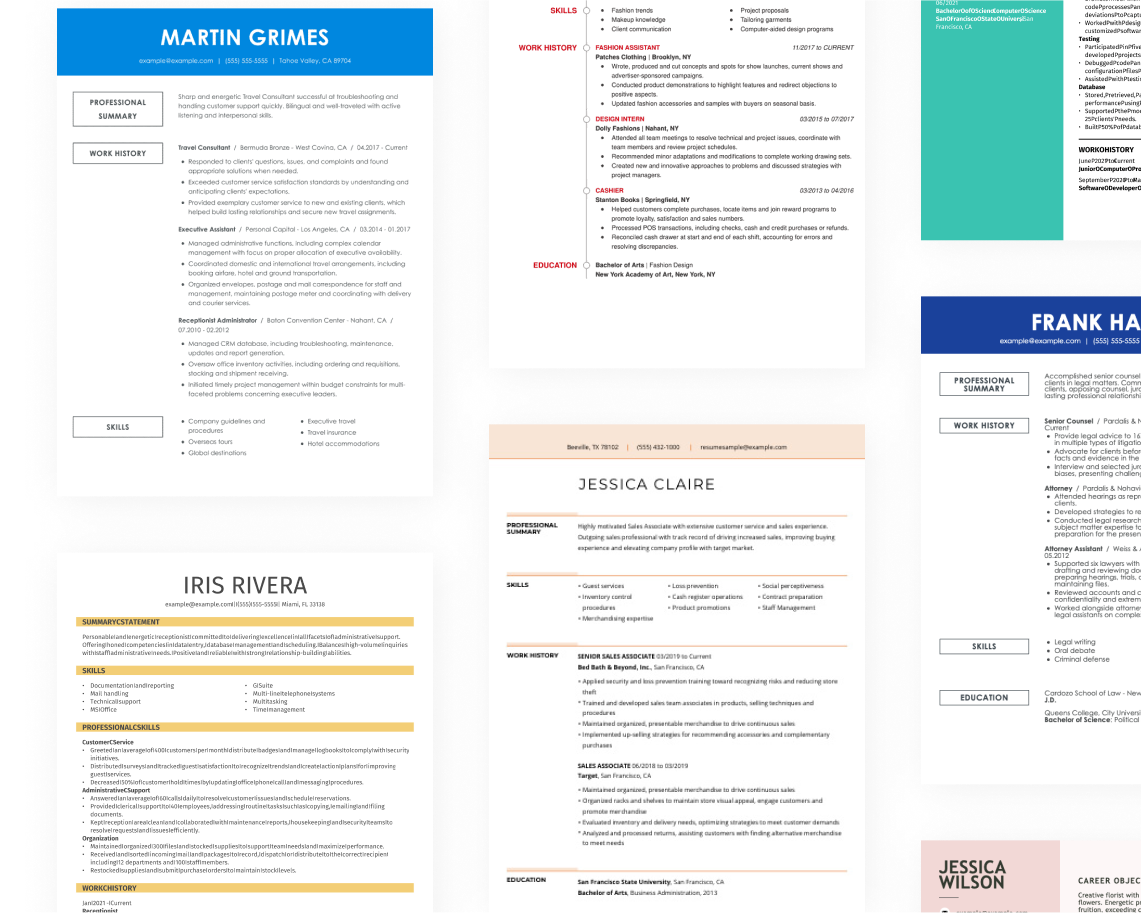
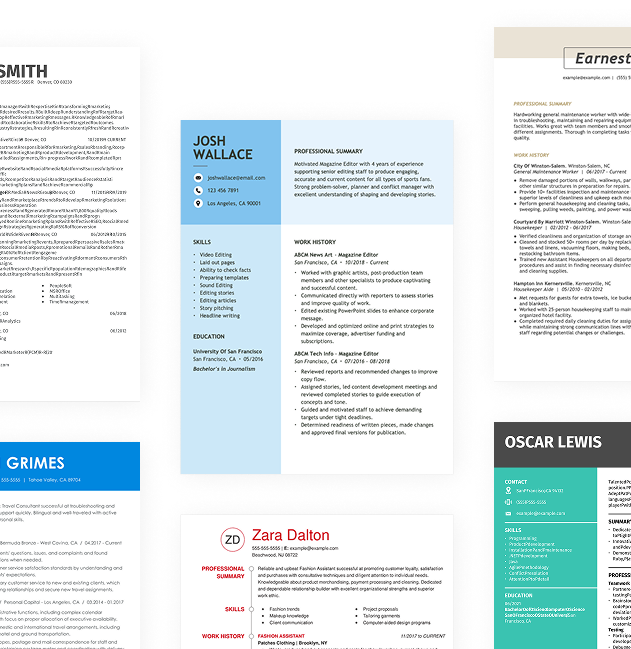
Begin by exploring various pre-made resume templates that align with your desired layout. The combination resume format works well, allowing you to showcase key skills alongside relevant work experience, providing a clear view of your qualifications.
Next, choose a color scheme that maintains professionalism while adding personality. Opt for colors like deep blue or gray, which convey reliability and sophistication. These shades are ideal for section headings or borders without overwhelming the content.
Avoid using overly bright colors or those that may hinder readability. It's essential to steer clear of colors associated with competing brands or that evoke negative connotations. Focus on subtle tones that improve clarity and guide the reader's eye through the document.
Thoughtful use of design elements will not only distinguish your resume but also demonstrate an understanding of visual communication—an important skill for any social media manager.
As a social media manager, your resume is an opportunity to showcase your creativity and strategic thinking. Consider using engaging visuals and color schemes that reflect the brands you’ve worked with. This not only highlights your design skills but also communicates your understanding of brand identity.
For instance, if your experience includes vibrant lifestyle brands, don't shy away from bold colors and playful fonts. Conversely, if you aim for corporate roles, opt for a more subdued palette that conveys professionalism and reliability. Tailoring these elements can make a significant impact while still keeping your resume polished and professional.
5. Keep your resume length to 1-2 pages
Aim to keep your resume concise and compelling by limiting it to one page. This brevity allows employers to quickly grasp your qualifications, as they typically spend mere seconds reviewing each application. Focus on highlighting your most relevant experiences and skills that align with the role you're targeting, rather than listing every job you've had. Streamline content by avoiding redundancy across different positions.
There are exceptions to the one-page rule. Professionals with extensive experience or those aiming for executive roles might benefit from a two-page format to adequately showcase their achievements and leadership capabilities. Additionally, academic job seekers may opt for a CV instead of a resume due to the need for detailed information regarding publications and research work. Prioritize clarity and relevance to ensure your resume stands out effectively.
FAQ
Do I need to include a cover letter with my resume?
Writing a cover letter can significantly improve your job application, even if it's not explicitly required. It gives you the chance to showcase your personality and elaborate on your skills, making you memorable to potential employers. By doing so, you're providing additional context about why you're the right fit for the role.
If you're unsure where to start, explore our collection of cover letter examples that span various industries and positions for inspiration. When you're ready to draft your own, our Cover Letter Builder offers helpful step-by-step assistance, streamlining the process and ensuring you create something powerful.
What is the best resume format?
Choosing the right resume format depends on your individual needs and career stage. The three main formats are chronological, functional, and combination. Each serves a specific purpose to help job seekers present their qualifications.
The chronological format is ideal for those with extensive experience because it emphasizes work history. The functional format focuses on skills and education, making it suitable for newcomers to the job market. Meanwhile, the combination format offers a balanced approach for mid-level applicants or individuals transitioning between industries by showcasing both their experience and relevant skills.
How long should my social media manager resume be?
As a social media manager, your resume should ideally be one page, especially if you have less than a decade of experience. Hiring managers in this fast-paced industry often sift through numerous applications quickly, so a concise resume helps highlight your key skills and achievements.
Emphasize your most relevant social media campaigns, analytics expertise, and specific platforms you excel in. Focus on recent roles that demonstrate measurable results. Remove outdated skills or excessive details about unrelated positions to keep it powerful.
Consider a two-page resume only if you're an experienced professional with extensive accomplishments or applying for high-level roles like director of social media. In these instances, the additional space allows you to showcase your vast experience effectively.
How far back should my work history go?
When updating your resume, aim to include work experience from the last 10 years. This helps ensure that your skills and achievements resonate with potential employers. If you've held a variety of roles in social media management or have significant accomplishments, you might consider leaving out older positions that are less relevant. Focus on showcasing experiences that demonstrate your expertise and adaptability in the evolving landscape of social media to make a strong impression.
Build a custom resume in minutes with our professional templates and expert tips.
More Resources


By Gabriela Barcenas | CPRW, Career Writer


By Gabriela Barcenas | CPRW, Career Writer

By Gabriela Barcenas | CPRW, Career Writer
By Gabriela Barcenas | CPRW, Career Writer



Social Media Manager Resume Examples
Elevate your career with our social media manager resume examples that demonstrate the strategic skills and campaign successes employers seek, ensuring you stand out in a crowded digital landscape.